SNR interviews: Leta McCollough Seletzky
“I hesitated to speak about it strictly in the past tense, because it had not disappeared. I had always navigated institutions that required very careful movement as a Black woman. It meant I could not always speak my mind without jeopardizing things I had worked hard to achieve.”
- Leta McCollough Seletzky
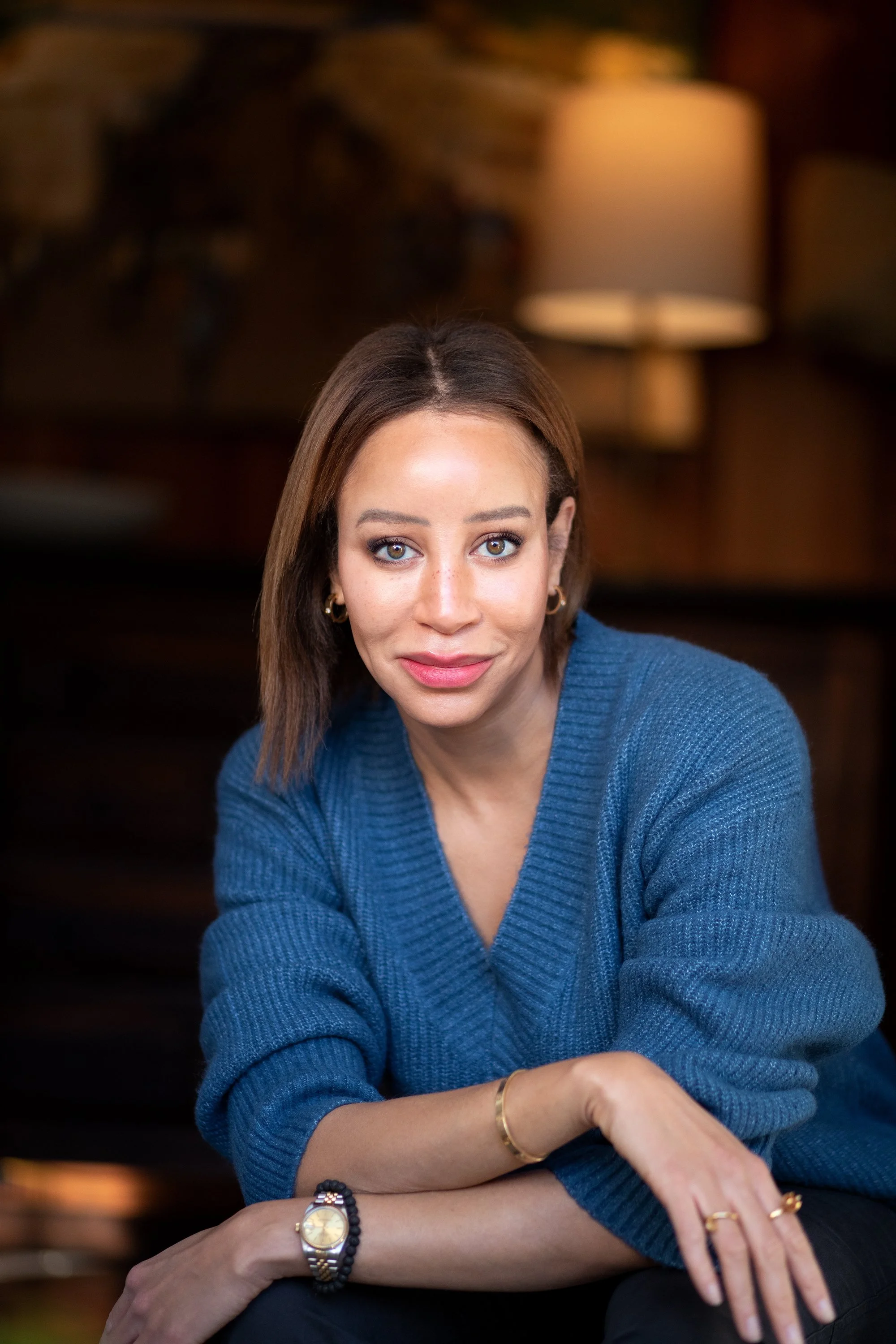
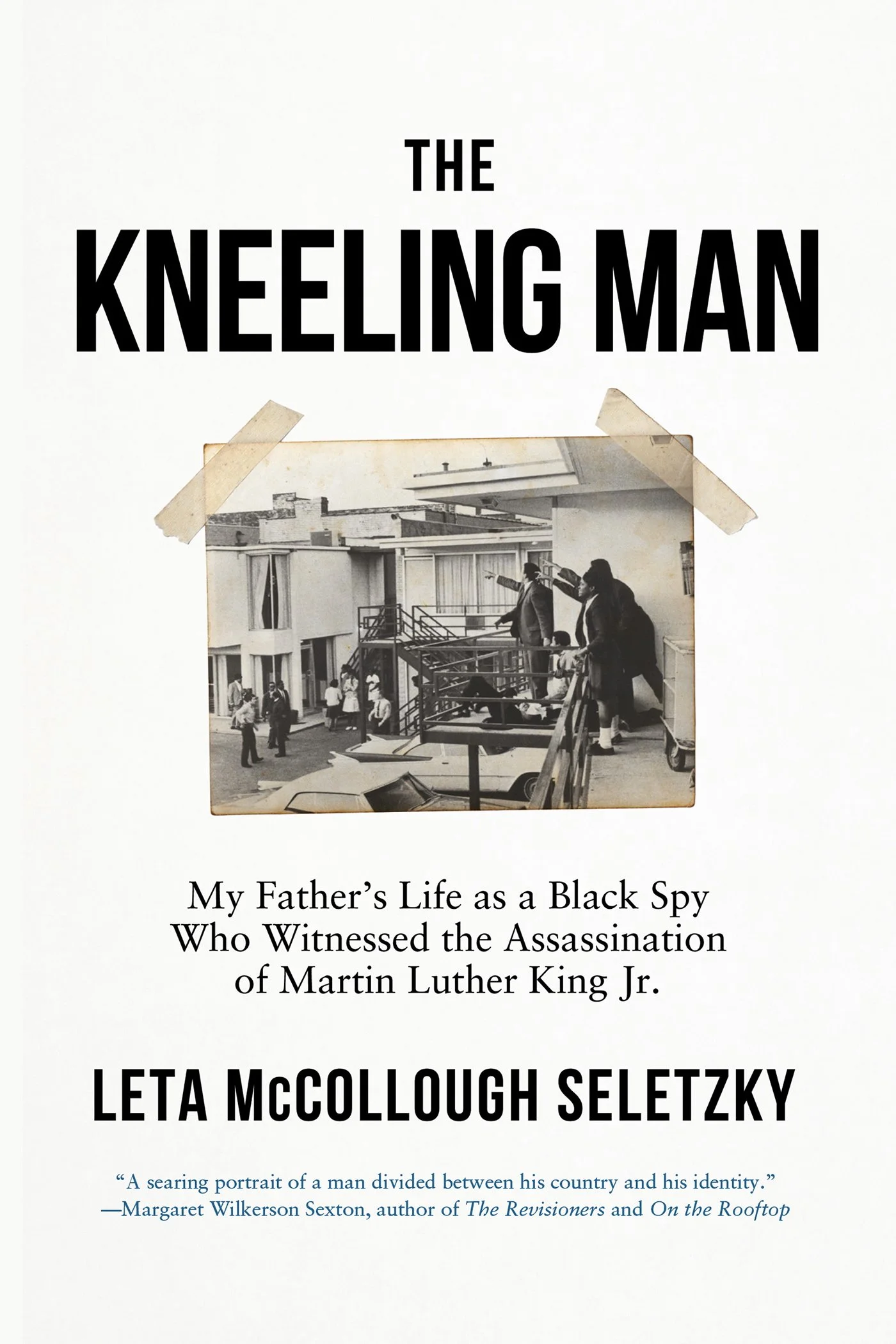
In The Kneeling Man, Leta McCollough Seletzky explores the story behind one of the most famous photographs in American history: the image of her father, “Mac”, kneeling beside Dr. Martin Luther King, Jr. on the balcony of the Lorraine Motel moments after Dr. King’s assassination. The Kneeling Man is at once personal history and national reckoning, probing what it means to bear witness to history while entangled within it.
A graduate of George Washington Law School and National Endowment for the Arts 2022 Creative Writing Fellow, McCollough Seletzky serves as Director of the University of Nevada, Reno at Lake Tahoe’s low-residency MFA program.
In a wide-ranging conversation, I spoke with McCollough Seletzky about the ethical tensions at the heart of her father’s story, the craft of writing the unspeakable, the weight of historical memory, and the responsibilities of both writers and institutions in shaping how stories are told.
Beau Noeske: Your essay, The Man in the Picture, featured on Oprah, along with the opening of your book, The Kneeling Man, details the story behind the famous picture of Martin Luther King, Jr. lying on a balcony after being shot. Can you walk us through your father’s perspective on that day, and your perspective learning about it?
Leta McCollough Seletzky: It was quite complicated to unpack. It encompassed his literal perspective and the sensory details of his experience, but also, in the bigger picture, his viewpoint on the assassination, his presence there, and what it all said about our society.
Zooming in on that day—April 4, 1968, Memphis, TN—my father was at the Lorraine Motel because he was working as a mole for the Invaders, a group that was working with Dr. King’s Southern Christian Leadership Conference to support striking sanitation workers. My father had gained access to this group at the behest of the Memphis Police Department, which was concerned that the Invaders were a threat to society. The department feared they would mobilize and radicalize the striking workers of Memphis.
I learned that the Invaders were not incredibly well organized. My father and the Memphis Police Department’s Bureau of Intelligence were often making things up as they went along. My father started out on this assignment like most patrol officers—guarding the replacement workers the city had hired to pick up trash during the strike—then guarding landfills, and eventually being asked to attend a mass meeting in plain clothes and get in with the Invaders. He went to meetings and did such a good job insinuating himself into this environment of almost exclusively Black people that the Intelligence Bureau asked him to gather information about the Invaders. He gained their trust and was quickly named their Minister of Transportation. He drove them around. Because of that role, he was at the Lorraine Motel.
Earlier that day, my father had gone to the Clayborn Temple, which was a rallying point. He found a couple of women who were college students working with the SCLC and James Orange (“Baby Jesus”), who needed a pair of four-button overalls. Looking back at photographs from those marches, that was the look people maintained to support poor people, common people, and agricultural workers. My father ended up taking Baby Jesus and the college students around to stores to find overalls. They returned to Clayborn Temple and met with James Bevel, another of Dr. King’s colleagues. They then headed to the Lorraine Motel, where Dr. King was assassinated.
My father had just exited the parking lot when he heard the gunshot and ran toward what was clearly an active shooter situation. He dropped down and army-crawled onto the balcony to Dr. King, who had been shot in the chin. He grabbed a white towel from a cleaning cart and applied pressure to staunch the bleeding. That was the moment captured in the photograph.
There were things my father perceived that were not visible in the photograph. He smelled the odor of gunpowder. He smelled layers of other scents: Dr. King’s facial depilatory residue and his cologne. He noticed blood spatter on Dr. King, which gave him the impression that the bullet had exploded. He relayed that observation to FBI agents, who dismissed it.
As far as his point of view regarding his presence there and the work he was doing, he was a Black man who had grown up in Jim Crow Mississippi and was now working against Black people fighting for the rights of those like himself while reporting to the police. At 23 years old and as a rookie police officer, he found himself in over his head. He did not understand the potential implications of being thrust into that situation.
He felt very much like a divided person, embodying the divided consciousness W.E.B. Du Bois described. He was a Black man against systemic oppression, yet he had a job to do. Having come through the U.S. military and understanding that one must separate personal opinions from professional duty, he maintained that separation. He felt sympathetic toward Dr. King and admired both him and the work of the SCLC. At the same time, he was a commissioned member of the Memphis Police Department charged with reporting on the Invaders to determine whether they were a public safety threat. He saw himself as a truthful reporter of what was happening.
That was a unique vantage point for a Black person to have at that time. He observed that the Invaders were not a public safety threat as a group. He believed his role may have prevented the police department from using aggression where it was not warranted.
BN: One recurring theme is compartmentalization and buried feelings. You had 17 pages of notes from your father which you didn’t read in full for five years. And in the closing line of the book: “Because as he approached freedom—or something like it—he realized it was tethered to unspoken truths he’d kept inside himself, secret and heavy.” Was this a theme that you identified from the outset of your research, or did it emerge as you were writing?
LMS: While I identified the theme early on, it returned in ways that were organic to the unfolding of the narrative. My father had been unable to look at his mother and sister during their funeral viewings. He was unable to face painful things. I realized that in order to tell this story, I would have to stop running from it, be still, and turn to face it.
I was able to do that in Tahoe in a creative nonfiction class taught by Gail Brandeis. One longer-form essay from that class became the seed for The Kneeling Man, initially titled “Not Writing About Dad.” The entire theme centered around something unspeakable that had to be spoken. As writers, we often face the paradox of speaking the unspeakable.
BN: We learn that your father, “Mac”, is a man who developed a very clear sense of ethics. He embraces responsibility of hard work and thrives in structures which reward merit. He joins the army, joins the Memphis police force, serves as a spy doing undercover work in infiltrating a suspected radical group called the Invaders, then on to join the CIA. In getting to know him better through interviewing him and writing this book, what was it about him that he thrived with structure in place?
LMS: What drove his sense of ethics and value for order was experiencing what life looked like without it. Growing up in the Mississippi Delta during Jim Crow, the law was applied in ways that were oppressive and fundamentally unfair. Sheriff Joe Taylor murdered a family friend who was a truck driver, and he was known for torturing and murdering Black people. That was not uncommon in the South. Justice and order were perverted and mocked.
Witnessing that, along with disorder in his own family life, instilled in my father an abiding belief that order and fairness were foundational to a fulfilling life. Those values had to exist for anything else to work.
BN: Later at a different school in Missouri with mostly white and Jewish kids, he eats spaghetti for the first time. He eats it without a napkin because he doesn’t know the etiquette. After that, he vows that he’s not going to be passive and let embarrassment or conformity hold him back again. Why was that detail key in outlining your father’s formative years?
LMS: I would not have assumed it was important, but I could tell it mattered deeply to him. He did not understand etiquette. There were unwritten rules everyone else seemed to grasp, and he feared breaching them. That moment led him to resolve that he would never again let embarrassment or conformity paralyze him. He would take action.
Throughout his career, he often found himself as the new person in unfamiliar environments. That was the moment he realized that if he wanted to get anywhere, he had to let go of insecurity and ego and simply move forward.
I came to think of the “dropped napkin” moment as motivation to act.
BN: Then he goes back to school in Mississippi and meets a teacher named Mr. Epps who introduces a new worldview to your father. What impact did that have on him?
LMS: Mr. Epps showed my father that there were alternative approaches to confronting systemic oppression. Until then, segregation felt like an unchallenged status quo. White people cut in line ahead of you without question. Mr. Epps was the first person to suggest that it could be confronted.
BN: These two forces, authenticity vs. conformity – loyalty to one’s own values vs. loyalty to institutional values – these collide over and over again. He apprehends a black suspect who was shot in the shoulder and watches a white officer hit him. He’s mad, he wants to speak up, but should he? He believes in Dr. King but infiltrates the Invaders, a group often at odds with Dr. King. Over and over again, he’s struggling to be true to himself and his values but also serving what he considers the greater good and trusting in these institutions where he’s always thrived. As a writer, how did you decide how to really highlight that ever-present struggle?
LMS: Those are examples of places where the story showed me how to tell it. Those happen to be inflection points in the narrative. Over and over again, I saw those kinds of inflection points. Those emerged as themes and I was able to see the parallels. As a writer, I followed the narrative, followed the story, and let it show me what the themes were.
BN: There’s a chapter where you speak your mind at a dinner party after the 2016 election of Trump which puts yourself in a similar struggle between being true to yourself and being polite. You’d noted “I’d been protecting their comfort, not mine.” How did you learn to navigate that same struggle between authenticity and conformity throughout your life?
LMS: It was lifelong. Like my father, I had been enmeshed in institutions in ways that required me to compartmentalize. On one hand, I felt a certain way personally, but on the other, I had to move forward professionally and socially. Those were not just official institutions; they included societal groups and structures as well. I constantly navigated how to remain as true to myself as possible while still maintaining my place within those systems. That balancing act required careful calculation.
At the dinner party in Tahoe, I was the new person in the group. In a superficial sense, I had been accepted. I was treated as a friend and included. But the cost of that acceptance was wearing a mask. I masked my personal feelings when comments were made that I disagreed with. I had worn that mask my entire life, starting in preschool, as the first generation in my family to attend graded schools in Memphis, Tennessee.
I remember being in high school when a racial census was conducted. We were asked to raise our hands if we were Black or if we were white. The first office I held in high school was Minority Vice President—which meant Black. That was the structure of society. I hesitated to speak about it strictly in the past tense, because it had not disappeared. I had always navigated institutions that required very careful movement as a Black woman. It meant I could not always speak my mind without jeopardizing things I had worked hard to achieve.
At that party in Tahoe, I reached a point where I decided I no longer needed to prioritize other people’s comfort over my own. I understood that if no one said anything, nothing changed.
“A recent epiphany I had was that yes, announcing you were a radical put you in the crosshairs, but on the other hand, you might find that you were in the crosshairs anyway.”
- Leta McCollough Seletzky
BN: Dr. King practiced and urged nonviolent reform. He appealed to a common sense of empathy and fairness that one can hope resides somewhere in all people. This was very different from the ideologies of the Black Panther Party or Malcolm X that were first shared with your father by Mr. Epps. In interviewing your father and writing The Kneeling Man, where did you sense your father navigated that spectrum, and has that changed over time?
LMS: As a person who valued order and following rules, my father had always advocated for using the tools of protest that were legally at our disposal. Before turning to protest, he believed in using the franchise—voting. Of course, Black people did not have full access to the franchise until the 1960s. He consistently advocated for legal means: demonstrations, protests, and nonviolence.
He wrestled with this deeply on the night Dr. King was murdered, when he drove members of the Invaders across town as they talked about burning down buildings. He believed that if Black people decided to take up arms, they would face the most powerful military in the world, and it would not end well.
His perspective did not change over time, though I came to see more nuance in it. Looking at our present condition, I was not so sure that Dr. King and Malcolm X were as far apart as people often believed. There was a strategic system behind Dr. King’s peaceful methods. Malcolm X spoke of “any means necessary.” There is a book called The Radical King, a collection of Dr. King’s writings and speeches. Although he used nonviolent strategy, the confrontations he made and sought were disruptive in ways that went beyond the physical. They were not violent, but they were incendiary.
I am not a scholar on these matters, but I was not convinced they were so far apart, particularly near the end of Dr. King’s life, when he spoke out against the Vietnam War and condemned the U.S. government for violence. He questioned whether he had been integrating Black people into a burning house. As he confronted the triple evils of militarism, poverty, and racism, he recognized that these forces combined to create a violent system, even when that violence was not always physical. While he stood for nonviolence, he confronted those evils with a force that matched the force of these evils.
BN: At a young age, you’d said you were a radical, your mom said “Don’t you ever say that. You aren’t any radical.” What has your journey been on that spectrum, and did writing this book change that for you?
LMS: If you look at where we are now, I think it shed additional light on why my mother reacted the way she did. If I came out and said I was a radical, I put myself in serious crosshairs. That was what my mom was trying to get me to understand. When you oppose the status quo, you put yourself in the crosshairs. I spent my life trying to reconcile the idea of moving through the world with integrity while also moving within systems in order to be effective. It was very difficult.
BN: How did you do that?
LMS: It was a wrestling process, making a choice every day about who I was going to be as I navigated those institutions. A recent epiphany I had was that yes, announcing you were a radical put you in the crosshairs, but on the other hand, you might find that you were in the crosshairs anyway.
BN: The Invaders were a small group of young black men and women under an umbrella called “Black Organizing Project” meant to restore pride among young, marginalized black people. You’ve noted it reminded you of the Black Panthers. This was at the height of the Cold War – from law enforcement’s perspective, if communism got any toehold, you had to stamp it out. The Invaders were cast as an enforcement arm, but the reality was, as your father concluded, it was a couple dozen young black and women who talked far left politics, smoked weed, and drank. You interviewed Coby Smith, one of the early leaders of the Invaders, in Memphis.
LMS: Coby was always a serious person, brilliant, thoughtful, and a high achiever. How did he square the potential of the Invaders with the reality of the Invaders? It’s complicated. He was saying the reality was they had a lot of people who were marginalized and living out the consequences of that type of marginalization. They lacked opportunities through legal means many times to move themselves upward, so they resorted to unlawful means to do that.
A recent epiphany I had was that yes, announcing you were a radical put you in the crosshairs, but on the other hand, you might find that you were in the crosshairs anyway.
- Leta McCollough Seletzky
BN: Has there been feedback from your readers that surprised you or inspired you?
LMS: Yes. So much that has done both. The first big surprise was what did not happen. I did not receive a great deal of blowback, which I had expected. When you put something like this out there, you have to be ready for people to react in ways that are uncomfortable, at a minimum. That did not really happen with the exception of some individuals who made threats on social media. There were instances in which the story was taken and spun in a conspiracy-theory direction. Compared to the overwhelmingly positive reaction in terms of support and outreach, those moments felt minor.
In Memphis, at the National Civil Rights Museum at the Lorraine Motel, I gave a book talk. I was allowed to go onto the balcony, which is not open to the public. In conjunction with that trip, I appeared on a local radio station where the host took callers. A man called in who claimed—credibly, after follow-up—that he had been a high school student when Dr. King came to Memphis to support the sanitation strike.
The first march Dr. King led there was a disaster. It spun out of control into a violent scene. It was a hot day, and thousands of people were walking close together down Beale Street, lined with stores that had plate-glass windows. The disorder began when someone broke a window. That became the catalyst. Soon more people were smashing windows. Strikers were carrying placards on wooden sticks, and some people began using the sticks. The police were looking for a reason to crack down. They came in macing and beating people.
Because of that, Dr. King had to return to Memphis to lead a peaceful march, and that was when he was assassinated. It is fair to say that had the first march not descended into violence, he may not have returned to Memphis at that time. That reality has led to speculation about the FBI and J. Edgar Hoover, and whether individuals may have been planted in the march.
The man who called in said that as a teenager he had participated in the march. Before it began, he had been drinking with friends and was angry. He said he was the one who smashed the first window. He had remained silent about it his entire life and had carried the guilt for decades. When I was on the radio, he decided to share that publicly. I would have liked to see more done with his story. It spoke to hidden history and the silence surrounding something that had long been unspeakable.
BN: Is there a question you wish people asked to better understand the heart of this story?
LMS: Yes. It’s a question I hope everyone confronts when they engage with this story. I want people to understand that this is not a story external to them. We are all living in the same kind of circumstances and dynamics that my father did. This is about all of us. This is not about a guy who was born in Mississippi who was in the famous photograph. The question everyone confronts is, “Who do I choose to be in relationship to the institutions I’m in every day, and what does it look like for me to be that person?”
BN: You’ve talked about black figures being exploited in written history. “Look at how this person helped ME connect with MY humanity.” I think that brings up the subject of what you’ve called colonialism in storytelling. For someone who reads this interview and reads The Kneeling Man with fresh eyes, what approach do you hope they would take when reading it?
LMS: I hope they would not read it as something outside of themselves or foreign to them. I hope they would see the parallels in their own lives. What I meant by storytelling colonialism was that with marginalized people, the rest of the world often took an extractive approach to cultural resources—stories, music, dance. Too often, marginalized people were not accorded the authority to tell their own stories. It was as if they needed someone outside their community to vouch for them in order to be taken seriously.
When I was at the Memphis National Civil Rights Museum, I was told that I was the first Black author to write about the assassination of Dr. King as a solo author. I was not aware of another Black author who had done so without partnering with a co-writer. It spoke to the difficulty of doing this kind of work as a Black person and as a Black woman. It went to the idea of authorial authority, and systemically, we had not been granted that authority. I hoped people would read this book as if it had been written by a white person. I wanted to be given the same authority they would give anyone else.
The question everyone confronts is, “Who do I choose to be in relationship to the institutions I’m in every day, and what does it look like for me to be that person?”
- Leta McCollough Seletzky
BN: Prior to writing this book, you graduated from George Washington Law School and served as an attorney. What skills from your education and career in law helped you write your essays and The Kneeling Man?
LMS: It would’ve been a much heavier lift to write and research absent my legal background. In my career and in law school, I learned how to tell a persuasive story to assess voracity, to look at facts and weigh them. A good litigator is a good storyteller. You have to know how to navigate systems. For example, I had to submit Freedom of Information Act requests, and my legal background prepared me to do that. In law school, I learned how to make a case.
BN: How did you structure your process? Did you do all your research first and lay it out in front of you before writing, or did you write and research simultaneously?
LMS: I did them simultaneously. The process is so important. This goes to why I love our Low Residency program so much. It’s an accessibility issue. I had to find time to write and research. I couldn’t front-load the process with research. There is a term, “research rapture,” where you gather material but never actually write anything.
More fundamentally, I experienced research and writing as breathing in and breathing out. Much of the thinking happened in the act of writing itself. I did not know what I needed until I began trying to write. Canned research led to a canned book. The process needed to be natural, flowing, and dynamic. I took in what I could, then I put something on the page. As I wrote, I realized there were more directed needs and a more intentional research path ahead.
I had to prioritize my work, and my primary source was my father. The books, interviews, and documents would remain available, but my father was a living library. I needed to interview him, listen to him, make it a conversation, and write down everything he said. None of us were promised tomorrow. I was disciplined about interviewing and transcribing the material myself to retain control of the process. Later, I used Otter AI to transcribe interviews, but that still required significant editing.
I was a mother of two and had a baby during the process. I wrote when I could and did not wait for inspiration. Inspiration came from taking in research and then breathing out onto the page.
BN: From when you started writing The Kneeling Man until you finished, what would you say you got better at as a writer?
LMS: I got better at not being a perfectionist. Good enough is good enough. I’d still be writing it today if I’d stayed a perfectionist. At a certain point, you have to publish and hit Send. My standards are stratospheric, and at heart I’m a perfectionist, but the urge to be perfect is identical to doing nothing at all. I embrace what Anne Lamott [calls the] ‘shitty first draft’, so get it done and get that out. Don’t be so caught up in self-imposed standards. You’re making things harder on yourself. Do your best, aim for excellence, but don’t let it stop you from getting the job done.
BN: You’ve said that the best readers make the best writers. What books and authors influenced you most as a writer?
LMS: I’m constantly reading, writing, going to hear and meet writers. I can’t think of them all, but notable ones are Ralph Eubanks and his body of work. I love his voice and his approach. There’s Toni Morrison and Dr. Maya Angelou. I like the way C.S. Lewis writes an essay. He weaves humor and humility into his work. Sarah Broom’s The Yellow House, and Heavy by Kiese Laymon. I would be remiss if I did not mention my mentor Jane Vandenberg, and The Architecture of the Novel, and The Art of Memoir by Mary Karr. Also, the work of the UNR faculty, their work and who they are as literary citizens.
BN: You’re the Director of the UNR-Tahoe MFA program. What brought you to UNR Tahoe originally?
LMS: It would be fair to say that The Kneeling Man brought me there. I never aspired to have a writing career. I aspired to pass the bar exam and build a legal career. I was born into this larger story, and it became clear to me that I had to tell it. After law school, I still did not have the craft tools of a creative nonfiction writer, so I sought out a nonfiction course.
I happened to be in Tahoe by circumstance while my husband was in Nigeria. We decided to get our own place, and it came down to Tahoe or Istanbul. Tahoe had the edge because it straddles California and Nevada, and we had family in California. I was there with my children in 2014 when the Ebola epidemic hit Nigeria. I remained in Tahoe and took a class at Sierra Nevada College. That class put me in touch with Gayle Brandeis. I wrote an essay that became The Kneeling Man. I became friends with Gayle, met June Saraceno, and eventually began teaching in the MFA program. It felt providential.
BN: For those writers who are reading this interview and are interested in an MFA, why do writers today need one? What does the process of getting an MFA do for an aspiring writer?
LMS: The MFA is for those who want to hone their craft in a serious and structured way in community with other writers so they can embark on a sustainable life of creation. The low-residency model of degree delivery is flexible, accessible, and allows students to integrate writing into their daily lives in a similar way that they will do after earning the degree. That could be becoming a career writer, working in publishing, teaching, founding literary magazines, etc. We have alumni that have done all of these things. We have a Grammy nominee. We have an award-winning poet that will be joining us in August. Our program stands out for how we nurture writers.
BN: You’ve noted that to you, “community” is a verb, and not a noun. You’ve also noted that we, as people, write to connect with each other. Connection is the ends; writing is the means. And one way that connection through writing happens is community such as the UNR Tahoe MFA program. How is community fostered at this program and why does that matter?
LMS: We foster community in a number of ways. We have a twice-a-year residency that is 10 days long. Writers are in workshops together, take elective courses together, share meals together, and spend time together. We get to know each other. We go to events. We do open mics. We are continually showing up for each other. No matter what’s going on in the world, we are there for each other during those ten days, and that matters.
It goes to the idea of human connection. It’s an idea that is getting lost in technology and what we can do. I am by no means anti-technology or anti-AI, but nothing can replace that human connection that has existed since the dawn of civilization, when people gathered around a fire to share stories. We keep that alive.
We use technology to stay connected virtually between residencies and for one-on-one mentorships. That is a very important point of connection as well. Everyone is looped into opportunities. We continue to grow that by providing virtual access to alumni and to people who cannot be with us for events. More events are planned between residencies.
BN: A lot of SNR’s readers are writers. They probably work jobs that they’re looking to escape, and they dream of writing that novel which will pull them out of the nine-to-five grind. You’ve also taught, mentored, and watched a lot of students graduate. What is something you believe separates talented writers from published writers?
LMS: Talent is great, but it’s like the internal combustion engine. It has a full gas tank, but it hasn’t been turned on. You have to take action. What separates the talented from the published is really doing the work; not only having the ability, but demonstrating and putting it into action. As someone who believes in the growth mindset, the more we do the better we get. Practice, improve, and having a writing practice makes us better writers.
BN: What are you working on next? I heard it was fiction?
LMS: My next project is a novel. Fiction is not an area I have dabbled in previously. I’ve had the idea for a long time. It’s a journalism version of The Kneeling Man. It has some basis in real events. It concerns a southern newspaper that was once thriving but finds itself in decline in ways that are similar to the decline of civil society and democracy. There’s a connection between these things.
Leta McCollough Seletzky is Director of the Low-Residency Master of Fine Arts in Creative Writing program at the University of Nevada, Reno at Lake Tahoe. A National Endowment for the Arts 2022 Creative Writing Fellow, she is the author of THE KNEELING MAN: MY FATHER’S LIFE AS A BLACK SPY WHO WITNESSED THE ASSASSINATION OF MARTIN LUTHER KING JR., a Library Journal Best Book of 2023, BookPage Best Book of 2023, Black Caucus of the American Library Association Honor Book for Nonfiction, and 2024 Hurston/Richard Wright Legacy Award finalist for Memoir Nonfiction. Her work has also appeared in The New York Times, The Washington Post, The Atlantic, MLK50: Justice Through Journalism, and elsewhere. She holds a B.A. from Northwestern University and a J.D. from The George Washington University Law School.