
How to sell your poetry book at AWP
Selling your book is difficult to do, no matter where you are on the chain of publishing. These days, publishers want you to do all the leg work themselves to get the word out on the art you have likely exhausted yourself over the past several years. The task of competing with the other two million books published every year feels daunting.
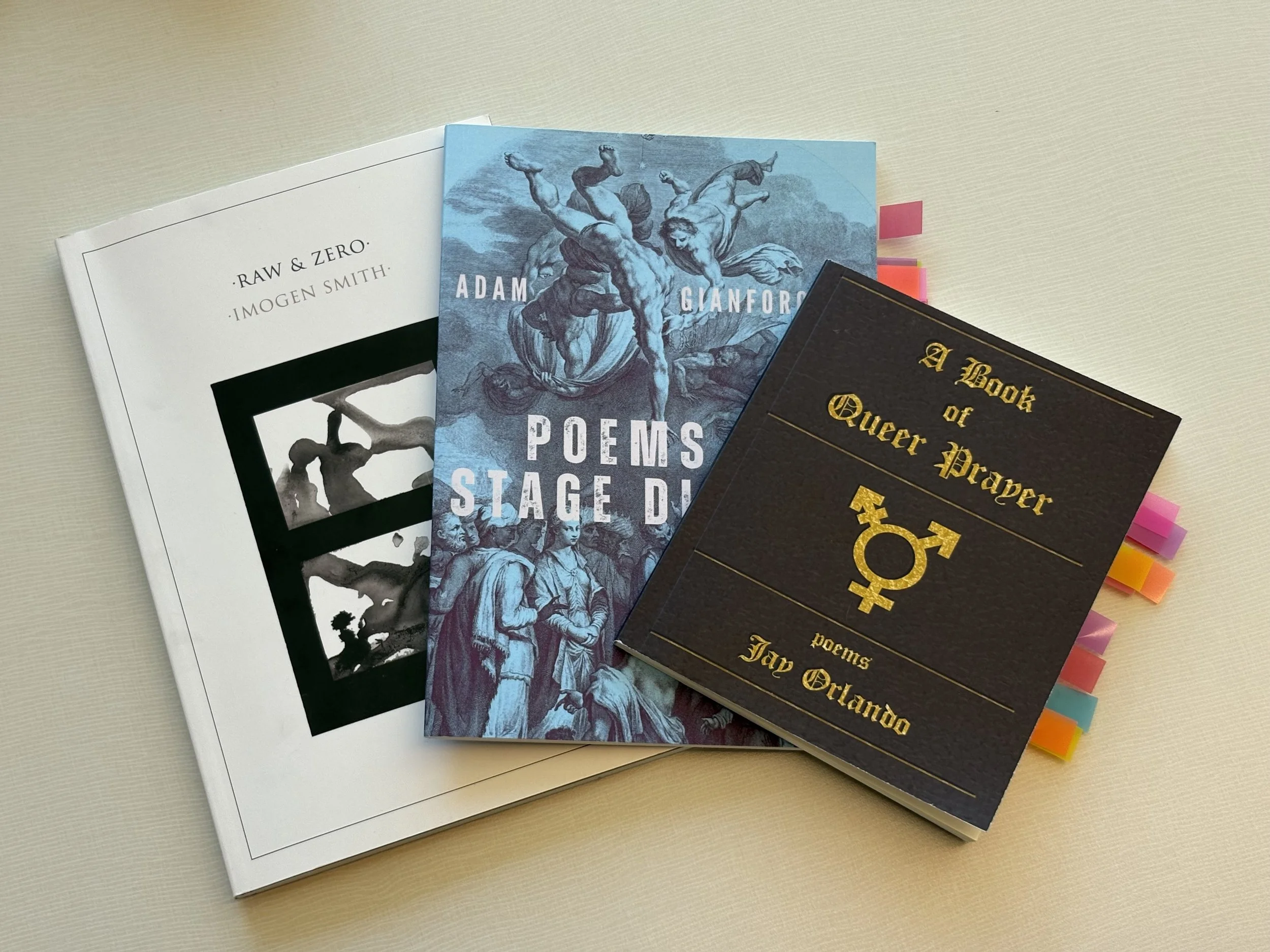
At AWP this year, I was specifically looking for new writers to discover, work that would surprise me, challenge me, and speak from the margins.. Following are three different poets I found through snappy titles, audience tuned pitches, and working the literary magazines and an overview of recently released or forthcoming collections.
#1 - Have a snappy title that gets people talking
A Book of Queer Prayer by Jay Orlando, Last Picked
From the time I sat down at the first panel, I did not stop hearing about A Book of Queer Prayer by Jay Orlando. Every beautiful queer I passed or spoke with was talking about this book. By the time I worked the UNR-Lake Tahoe booth, all the cohorts in the Full Residency program were showing off the small, beautifully designed chap book to each other. I had to go check it out.
Orlando understands that being queer requires heavy faith from which there are no sermons sung in houses of worship, no prayers to whisper to ourselves when we are walking home alone, no scripture to recite to each other when we need the spirit to save us. He writes in his poem “Like Fox Mulder, I Want to Believe" that he borrows “the language of the believer with no intention of returning it.” Queer people must borrow from the rituals and faith often used to oppress us and make up the rest as we go along. We “cosplay faith” because we already know there is no promised heaven and true faith is madness. But even the deepest nihilist needs relief sometimes.
Orlando’s poems explore how his body, and thus his queerness, are forever tied to his mother in her absence. Never worthy, accepted, nor beautiful as a whole, Orlando’s work highlights how painfully absent she is in death. Faith then is all Orlando has to replace the vacuum of loss left behind. Even if the rituals are simple performance, they still perform the function of validation of the queer existence.
#2 - Have a way to hook in YOUR reader
Poems to Stage Dive To by Adam Gianforcaro, Stanchion Books
“Hey, you look like someone whose stage dived before” one of the more outgoing and enthusiastic people said to me as I attempted to walk by. I am an easy target that way, wearing all black, covered in patches, dumb band names scrawled across my chest. But the man my age saw me and had a good hook. When he directed me to the author, Adam Gianforcaro, and he told me his title, Poems to Stage Dive To, I was already in. When Gianforcaro gave me the pitch that his book was about coming of age and coming out as gay in the hardcore punk scene we would end up hugging, having found common ground in our common experiences.
Gianforcaro offers all bangers, no filler. His book is not weighed down by cheap interludes or half crafted instrumental breaks. There is no crowd killing monologues nor calls for a wall of death to create a manufactured sense of intensity. Each poem connects with the reader, loud, fast, and quick like a good hardcore song should.
Giancarlo sees the queer kids, the gay punk boys trying not to stare at the other boys, the butch girls with mohawks, and the awkward they who has not heard the song that will change their life or seen a band made of all queers that will assure them they belong. He gives us confidence to have “a body to blue and bruise” in the crowd with other kids. Under these poems, we no longer have to hide, and we never should have in the first place.
#3 - Work the Grad Programs and their Lit Mag staff
Raw and Zero by imogen smith, Nightboat Books
If you already have a book out, the maze of tables filled with small presses, expensive services, and graduate school programs can feel a bit unnecessary. After all, the words are already on the page. But every writer needs to get out and read their work. So why not pitch to the Universities to come do a reading in your area. This is exactly what imogen was doing, and they found a kindred spirit for their eco-poems that also explore the trans experience offered in Raw and Zero.
imogen smith proves that the best poems are the ones that marinate in the body. Her work has stayed still in reflection, not placed on the page simply to startle, but to subdue the reader. In “hot muck making” the repetition of “fuck” does not deliver nasty or sinister but instead feels like flower petals plucked by a lover from the receptacle of the flower. Fuck poems are usually not tender while also being horny and hot, but smith is able to deliver a smattering of emotions that are both slutty and searing the heartstrings.
In “vibe city, or, the parasocialites” smith becomes the poet of a crush that imagines the erotic. The poem forces us to contend with the question of desires of wanting and asking are they valuable because of language or impossible because nothing can truly capture the heightened breathing that when you are alone with wanting. And still, smith will leave you feeling her gentle touch well after the poem has lingered away.
The world of self-promotion for a writer of any ilk can feel daunting, especially as we tend to shine at our desks, transcribing our mania into words. But in these days of small budgets and even smaller attention, working the crowd in one way or another is an absolute must. There is not one answer to the problem of getting your book into the hands of excited readers who either are or do not know they need your work. Finding the best way takes time and practice, but Orlando, Giancarlo, and smith all offer different approaches that led to me being a little poorer in dollars but so enriched to be seen and to see my queer family shine on the page.
